
How to start a profitable shortlet business in Lagos: a step-by-step guide
Clavibase
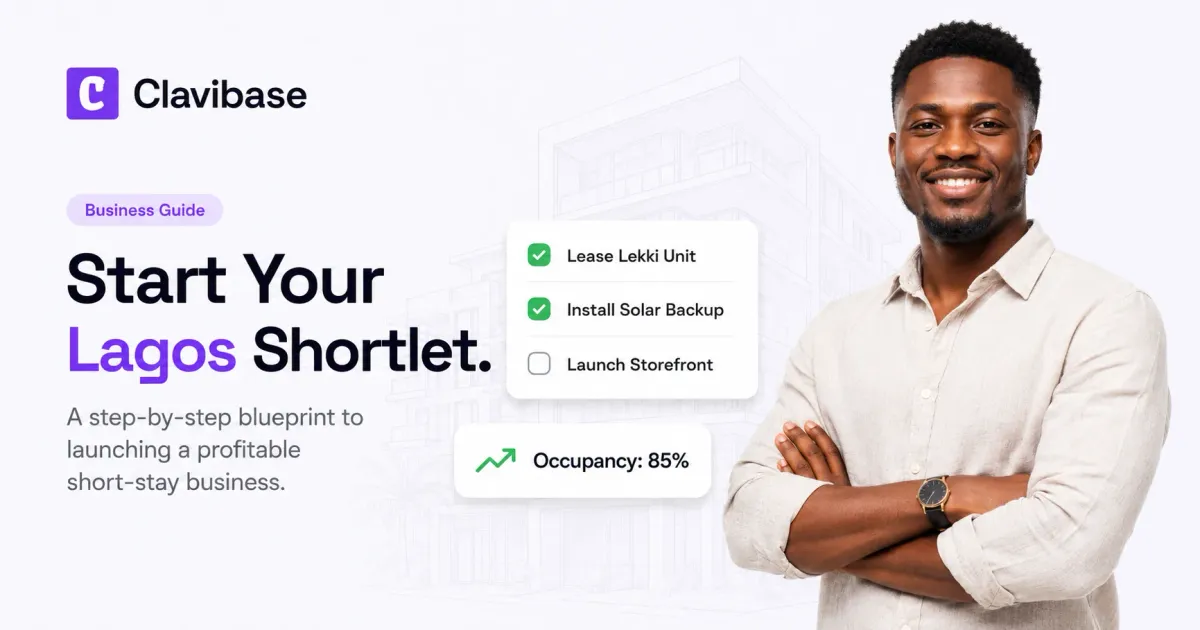
Lagos has no shortage of people who need a bed for a few nights: diaspora visitors, corporate travellers, tourists, and locals escaping their own neighbourhood for a weekend. That demand is one reason shortlets attract investors who might otherwise choose traditional yearly lets.
A standard tenant gives you relatively stable income based on the rent you agree. A well-run shortlet can offer higher gross revenue, but it also brings operating costs, vacancy risk, and more day-to-day work. Treat it like a hospitality business, not a side hustle you post on Instagram and forget.
Here’s the blueprint.
Step 1: Choose the right location
Location decides two things: your nightly rate, and how many nights you actually fill. Get it wrong and you can have the nicest apartment in Lagos sitting empty.
Lekki Phase 1, Victoria Island, and Ikoyi remain popular with corporate clients, expatriates, and guests with bigger budgets. Don’t overlook the Mainland, either. Ikeja GRA, Surulere, and parts of Yaba can attract business travellers and creatives, and the entry cost may be lower.
As a rough illustration, the entry cost for a decent one-bedroom apartment in Lekki Phase 1 can sit well above what you would pay in Yaba or a quieter Mainland location. The nightly rate may also be higher. The trade-off is not “Island good, Mainland bad.” It is whether your capital can earn its keep at that location’s likely occupancy and rate.
Step 2: Own it or lease it
You do not have to buy a property outright. Two common routes are:
- Buy. This has a higher upfront cost, but you own the asset and may benefit from future appreciation.
- Rental arbitrage. Lease an apartment long term, furnish it, and sublet it for short stays.
If you go the arbitrage route, get the landlord’s consent in writing and state explicitly that the property will be used for shortlets. Without that consent, you may breach your lease, face termination, and put your investment at risk. Ask a qualified lawyer to review the agreement before you furnish or market the property.
Step 3: Solve for Lagos infrastructure before your first guest
Grid power alone will not cut it. If you want to charge premium rates, the apartment needs to function like NEPA doesn’t exist.
At a minimum, you will need a reliable backup-power setup, or an estate that already guarantees power, and fast internet from a dependable provider. Many corporate guests need to work from the apartment, so patchy Wi-Fi can be a dealbreaker rather than a minor inconvenience. Add a suitable water-treatment setup if the building’s supply is poor, and make sure the estate takes security seriously.
Step 4: Furnish for the photo, then for the stay
Your photos earn the booking. The stay earns the review. So the apartment has to look good on a phone screen, and then actually hold up once someone’s sleeping in it for three nights.
Don’t cut corners on the bed. A poor mattress can quickly lead to a bad review, and reviews influence future bookings. Beyond that, keep the space minimal rather than cluttered. Choose warm lighting over harsh overhead lights, and consider one or two pieces of local art so the apartment does not look like every other listing. A microwave, smart TV, washing machine, and properly stocked kitchen can also make a practical difference.
Step 5: Get your bookings off spreadsheets
Many new hosts run everything by hand at first: tracking bookings in Excel, sending account numbers over WhatsApp, and coordinating cleaners in a group chat. It works for a while. Then you get double-booked, or a guest sends proof of payment to the wrong number, and you realise manual systems do not scale well.
Clavibase brings those workflows together in one place. Instead of juggling spreadsheets and screenshots, you get:
- A direct-booking storefront, so you’re not paying OTA commission on every repeat guest.
- Built-in Paystack payments, so you stop manually checking bank alerts.
- One calendar across all your listings, so check-ins, check-outs, and cleaning don’t collide.
Start small
You don’t need five properties on day one. Get the first one right: location, infrastructure, the details guests actually notice. And put the systems in place to run it without babysitting it. That’s what makes the second and third property easier, not harder.
Ready to launch with the right tools? Create your free Clavibase account and set up your booking storefront in minutes.