
The host’s guide to preventing double bookings across multiple platforms
Clavibase
Picture this: It is 8 p.m. on a Friday. A tired guest who has just landed at Murtala Muhammed International Airport arrives at your shortlet in Lekki. They have their luggage in hand, ready to check in and rest.
But as they open the door, they find another guest already unpacked and watching TV in the living room.
This is a double booking, one of the worst situations a shortlet operator can face.
Double bookings do more than cause a chaotic Friday night. Depending on the platform and circumstances, they can lead to cancellation costs, affect your host status, and result in poor reviews that damage trust in your brand.
If you list your property on multiple channels to maximise your exposure, managing your calendar becomes a critical daily task. Here is a practical guide to why double bookings happen and how you can reduce the risk.
Why double bookings happen
Most double bookings are not the result of host carelessness. They usually happen due to one of three common operational gaps:
1. The danger of manual syncing
Many hosts list their properties on Airbnb and Booking.com while also taking direct bookings through Instagram. When a guest pays by bank transfer for an Instagram booking, the host may intend to log in to Airbnb manually and block those dates.
But life gets in the way. You get stuck in Lagos traffic, sit through a meeting, or simply forget. Before the calendar is updated, another guest can book the same dates on Airbnb.
2. The iCal sync lag
Major listing platforms allow you to sync calendars using a technology called iCal (calendar feeds). While iCal is useful, it is not instantaneous.
Listing platforms do not exchange iCal updates in real time. Instead, they “poll,” or check, each other’s calendars periodically. The refresh interval varies by platform, so a booking made on one platform may not appear immediately on another. If a second guest books during that delay, you can end up with a conflict.
3. Human error within the team
If you employ a co-host, a property manager, or a cleaning supervisor, miscommunication can lead to overlapping bookings. If one team member manually blocks out a date for maintenance but doesn’t tell the person handling direct enquiries, a conflict can follow.
How to reduce double bookings
To scale your shortlet business without the constant anxiety of overlapping reservations, you need to implement a structured calendar strategy.
1. Establish a single source of truth
Do not let your booking calendars operate independently. Choose one central dashboard to act as your source of truth. Record every booking there as soon as possible, whether it comes from Airbnb, Booking.com, or an Instagram DM.
2. Move beyond spreadsheets when needed
Manually tracking dates in Excel or Google Sheets can work when you have one property and receive only a few bookings. Once you have multiple units or frequent bookings, manual spreadsheets become a liability. At that point, use a system that updates the calendar automatically when a booking is confirmed.
3. Lock dates when direct bookings are confirmed
If you accept direct bookings, connect your booking storefront to your main calendar. When a direct guest completes the required booking steps, those dates should be blocked promptly so another guest cannot reserve them through the same calendar.
How Clavibase helps
Managing calendars across different platforms can feel like a full-time job. Clavibase gives hosts one place to manage their direct-booking operations.
With Clavibase, you can centralise your calendar management:
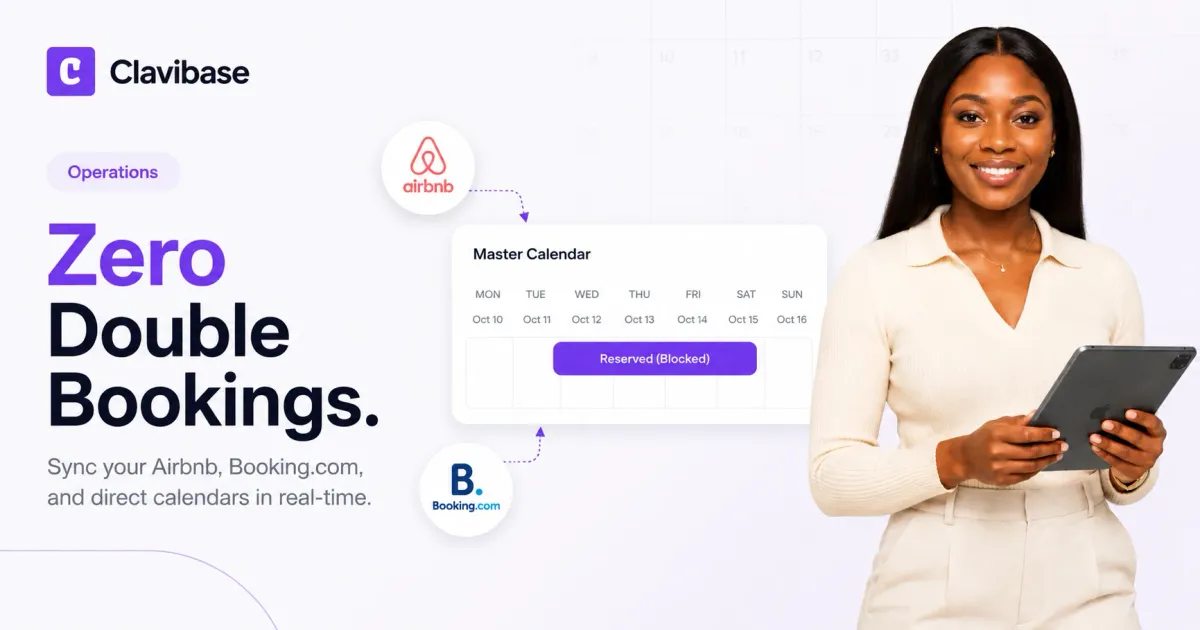
- Unified calendar view: See reservations, check-ins, and check-outs across your properties on one clean, colour-coded screen.
- Direct-booking calendar updates: When a guest completes a booking through your Clavibase storefront, the reservation is reflected in your Clavibase calendar.
- Team access: Give authorised team members access to the information they need so everyone works from the same schedule.
Protect your reputation
In the hospitality business, your reputation is your currency. A double booking can undermine hard-earned guest trust and positive reviews. By moving away from manual tracking and adopting a centralised calendar system, you reduce the risk for your guests, your brand, and your peace of mind.
Ready for one calendar you can trust? Try Clavibase free and keep double bookings off your weekends.